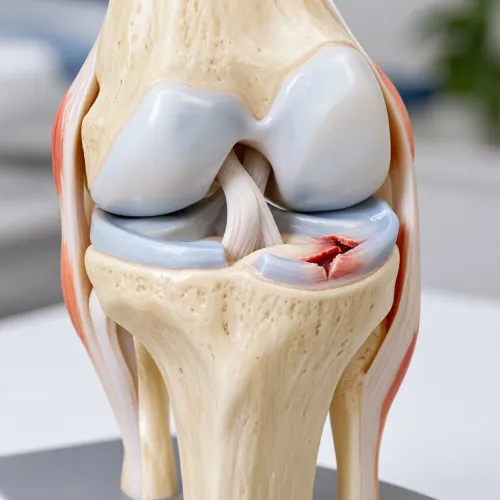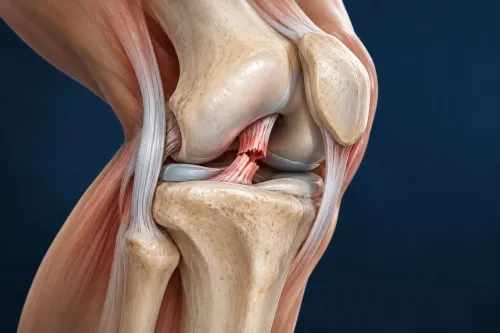
Walking without a limp is an early recovery milestone, not proof that your knee is ready to run, cut, jump, or absorb contact. You will learn how activity is progressed from protection and mobility work to strength training, running, sport-specific drills, and competition, and how symptoms, testing, and confidence guide each step.
Key takeaways
- Progress from protected movement to strength, running, skills, and confidence.
- Use strength, hop, movement-control, and symptom checks before progressing.
- Choose low-impact activities while your knee rebuilds capacity.
- Treat readiness tests and knee response as clearance, not elapsed time.
The recovery pathway: from protected movement to full sport
Recovery is a sequence of separate milestones, not one date on the calendar. The ACL reconstruction recovery phases move from protecting healing tissues to restoring movement, strength, running control, sport skills, and confidence.
- Early protection: control swelling, protect the graft and any meniscus repair, regain full knee extension, and walk with support as advised. Gentle bending and prescribed exercises begin the range of motion work.
- Strength rebuilding after ACL surgery: progress from quadriceps activation to resistance training, controlled step-ups, and single-leg squats. Comfortable walking does not prove that the quadriceps can absorb landing or cutting forces.
- Running: begin only when swelling is settled, motion is near normal, strength is sufficient, and you can control single-leg loading without pain or buckling. Cycling, walking, swimming after wound healing, and low-impact exercise usually come earlier.
- Agility and practice: add hopping, deceleration, direction changes, and sport-specific drills. Progress from individual non-contact practice to team training before considering contact or competition.
- Full sport: return requires stable symptoms, full motion, strong and symmetrical quadriceps and hamstrings, acceptable hop performance, sound movement mechanics, and psychological readiness—not simply elapsed time.
A commonly used benchmark is at least 90% symmetry between legs for strength and hop tests, but the uninjured leg can weaken too. Graft choice, meniscus or cartilage treatment, additional ligament injury, age, and persistent weakness can lengthen the plan. Resume each demand only when the knee handles the previous one without increased swelling.
The tests that show whether your knee is ready to progress
Clinicians progress you when your knee meets functional criteria, not simply because a certain number of weeks has passed. Comfortable walking is an early milestone; jogging, agility, practice, and competitive sport each require greater strength, control, and load tolerance.
- Before jogging, you need full knee extension, near-full flexion, minimal swelling, and a controlled single-leg squat without the knee collapsing inward. Your therapist may also assess walking and landing mechanics.
- Before agility drills, quadriceps strength symmetry and hamstring strength should commonly reach at least 90% of the other leg, measured with a dynamometer or equivalent test. Step-downs, repeated single-leg squats, and hop tests expose weakness that ordinary walking can hide.
- Before sport, you need satisfactory hop distance and landing quality, strength under fatigue, sport-specific drills, and confidence in cutting or decelerating. Contact and pivoting activities require a higher standard than straight-line exercise.
Knee swelling after ACL surgery is a warning, not a challenge to push through. Swelling that returns after training usually means the current load exceeds the knee’s tolerance, so clinicians reduce or modify activity and reassess motion, strength, the meniscus, and the graft.
A 90% limb-symmetry score does not prove full recovery because the uninjured leg can also weaken after surgery. Clearance combines test results with symptoms, range of motion, movement quality, psychological readiness, and time from surgery; no single test confirms that the graft is safe.
Choosing safe activities while your knee rebuilds capacity
Walking without pain does not mean the knee is ready for jumping or changing direction. Choose activities that build strength without repeated twisting, sudden deceleration, or landing on a bent, unstable knee.
| Activity | Use during rehabilitation | Main restriction |
|---|---|---|
| Cycling after ACL reconstruction | Begin with easy stationary cycling, then increase resistance as motion and swelling allow. | Do not force a deep bend or continue if the knee swells afterward. |
| Swimming after ACL surgery | Start after the incision has healed and your clinician permits pool use; front crawl and gentle kicking usually load the knee less. | Avoid forceful breaststroke kicking until cleared. |
| Gym training | Use progressive resistance for the quadriceps, hamstrings, hips, and trunk, with careful single-leg control. | Avoid maximal loads, twisting under load, and exercises that provoke pain or effusion. |
| Running after ACL reconstruction | Start only after adequate strength, range of motion, impact tolerance, and movement control have been tested. | Do not use jogging as a calendar milestone or progress through swelling. |
| Cutting, jumping, and contact sport | Add landing, deceleration, balance, and direction-change drills late in rehabilitation. | These movements create high knee loads and require objective clearance. |
Recurrent swelling after exercise means the workload exceeds the knee’s current tolerance. Reduce or modify the session and seek reassessment rather than pushing through it. A graft can face high strain during pivoting, awkward landings, sudden stops, and contact, even when daily activities feel normal.
How your operation and symptoms change the plan
Two patients can reach the same activity goal on different schedules because the operation repairs more than one problem at once. ACL graft choice affects donor-site symptoms: patellar tendon grafts can cause front-of-knee pain and kneeling difficulty, while hamstring grafts can leave greater early hamstring weakness.
| Factor | How it changes the plan | What to expect |
|---|---|---|
| ACL graft choice | Directs strength work around donor-site weakness or pain | Progress depends on function, not graft name |
| Meniscus repair recovery | Limits deep bending, squatting, and impact while the repair heals | Slower loading than an isolated ACL reconstruction |
| Cartilage damage | Increases concern about impact-related pain and joint irritation | Running and jumping may need a more cautious build-up |
| Additional ligament injury | Requires protection of several healing structures | Bracing and sport drills may advance later |
Cartilage damage and a previous meniscectomy also influence long-term joint loading. Comfortable walking does not prove that the graft, meniscus, or quadriceps can tolerate cutting and jumping. Dr Ronak Kothari can help interpret the operation notes and examination findings when deciding whether pain reflects normal loading or an associated injury.
Contact your surgical team promptly for:
- Increasing calf swelling after surgery, calf tenderness, warmth, or new breathlessness; breathlessness or chest pain needs emergency care.
- Fever, spreading redness, pus, wound opening, or rapidly worsening knee pain.
- A locked knee, sudden loss of extension, a new giving-way episode, or a sharp pop followed by swelling.
Do not train through these signs or use the calendar to overrule them.
Related service
Knee Arthroscopy & Sports Medicine Knee Arthroscopy & Sports Medicine Dr. Ronak Kothari, a skilled Orthopaedic Surgeon, specializes in Knee Arthroscopy and Sports Medicine, offering advanced, minimally invasive... View service → |
Returning to sport without treating the calendar as a clearance
Nine months is a risk marker, not a permission slip. In one prospective cohort of young athletes, each month that return to a pivoting sport was delayed up to nine months was associated with about a 51% reduction in reinjury risk; nine months did not guarantee safety.
Young, active athletes still face an ACL reinjury risk of roughly 20%–30%, involving either knee, especially during the first years after returning.
Before full sport, look for these clearance conditions:
- No recurrent swelling, giving-way, or loss of knee extension after training.
- Quadriceps strength and single-leg control that closely match the other side.
- Hop testing with comparable distance, landing control, balance, and deceleration technique.
- Completion of sport-specific running, cutting, jumping, and non-contact practice without symptoms.
- Confidence to react at speed, assessed alongside physical testing rather than used as a substitute for it. The ACL–Return to Sport after Injury scale can reveal fear that strength measurements miss.
Return through increasing practice demands before competition. A failed session is useful information: reduce intensity, correct the movement, and rebuild capacity rather than masking swelling with medication.
Maintain strength, landing mechanics, trunk control, balance, and cutting drills throughout the season, not only during rehabilitation. Keep regular quadriceps and hamstring training, warm up before sport, and arrange review for repeated swelling or instability.
Meniscal or cartilage damage and persistent weakness can raise later osteoarthritis risk, so a successful return does not remove the need for long-term knee care.
Frequently asked questions
What are the main ACL reconstruction recovery phases?
Recovery progresses from protected movement to restored range of motion, strength, running control, sport skills, and confidence.
Which tests show whether your knee is ready to progress?
Strength tests, hop tests, movement-control assessments, and symptom checks help determine whether your knee can handle the next stage.
Which activities are safer while the knee rebuilds capacity?
Choose activities that match your current strength, control, symptoms, and surgical restrictions, then increase impact gradually.
How do the operation and symptoms change the recovery plan?
Graft choice, additional repairs, swelling, pain, restricted movement, and weakness can change the exercises, loading, and timeline.
When can you return to sport after ACL reconstruction?
Return when your knee meets objective strength, hop, movement-control, symptom, and sport-readiness criteria rather than relying on a calendar date.