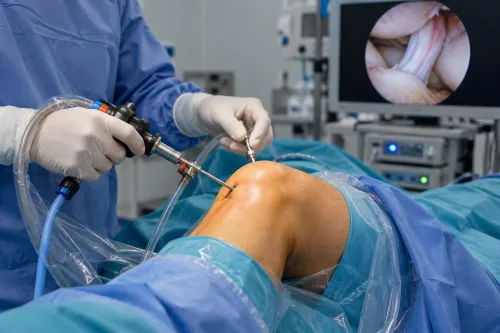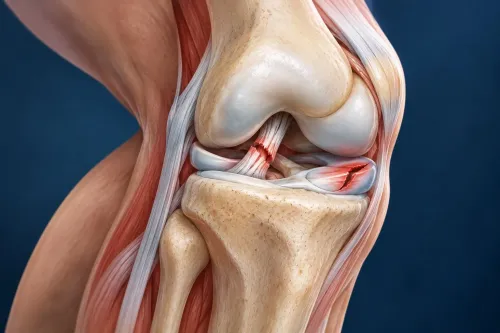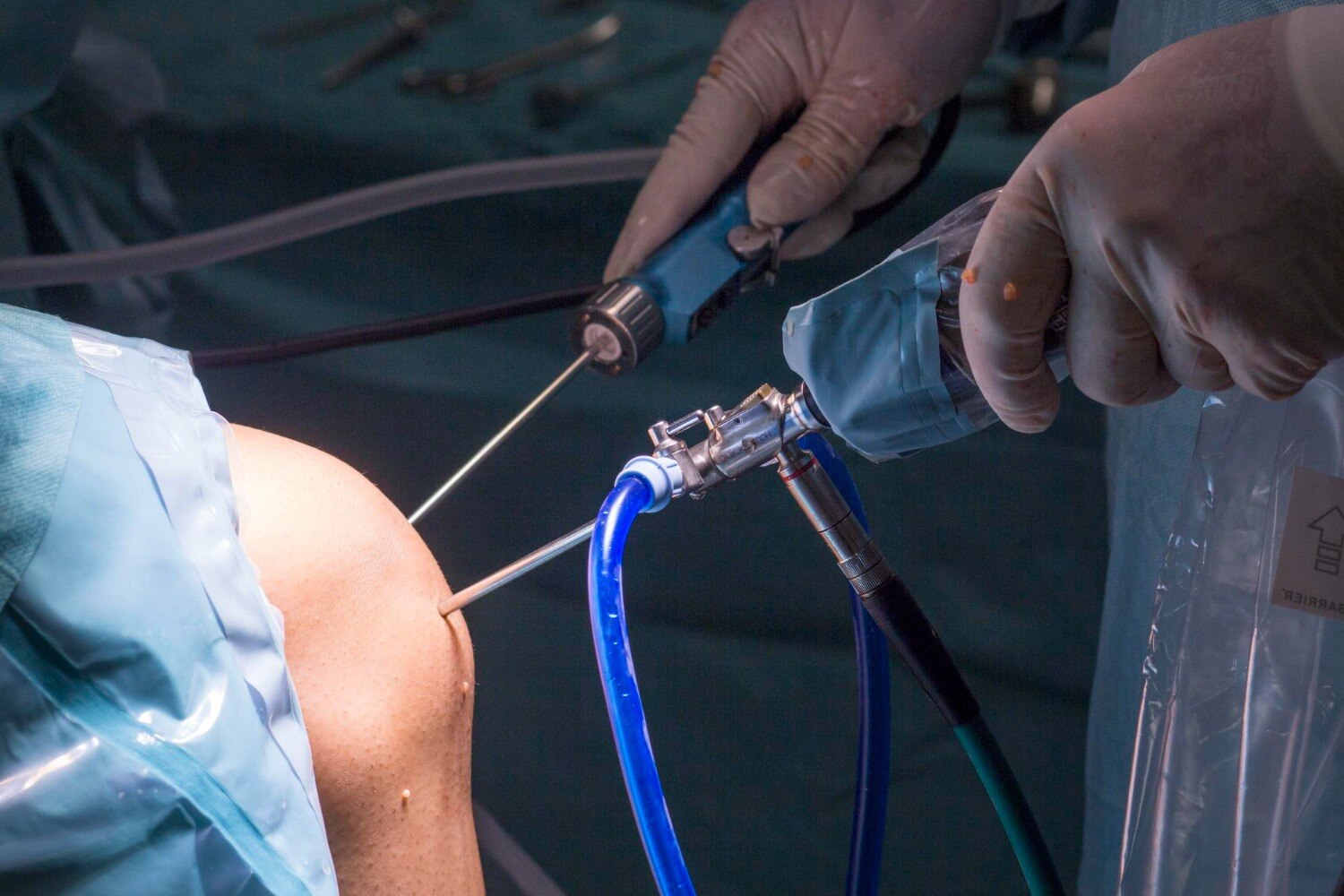
Knee symptoms that continue after rest and home treatment do not automatically mean you need arthroscopy. The useful distinction is whether your knee has a treatable mechanical problem, such as a displaced meniscal fragment blocking movement, or pain from arthritis and tissue changes that surgery is unlikely to correct.
Key takeaways
- Request reassessment when symptoms persist, recur, or limit work, sleep, sport, or movement.
- Arthroscopy needs a specific treatable problem, not knee pain alone.
- Try structured rehabilitation first when no mechanical problem requires surgery.
- Compare expected benefit, recovery time, complications, and non-surgical alternatives before deciding.
When persistent knee symptoms need a fresh assessment
Persistent knee problems deserve a fresh assessment when symptoms last several weeks despite sensible activity modification and treatment, return repeatedly after rehabilitation, or interfere with work, sleep, sport, or full movement. Duration, recurrence, and failed treatment matter more than pain intensity alone.
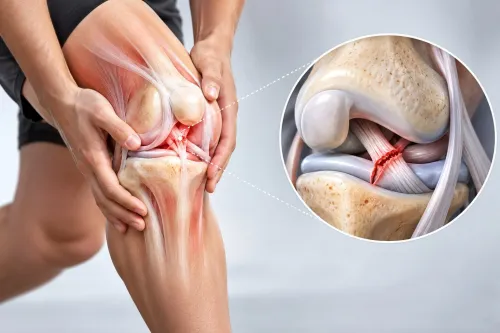
Persistent knee pain from osteoarthritis, including aching and stiffness, does not automatically support arthroscopy. Repeated true locking, catching from a displaced meniscal fragment, recurrent knee swelling, instability after a ligament injury, or a suspected loose body justifies a focused orthopaedic review.
Clicking or intermittent knee catching and giving way alone does not reliably predict benefit from surgery.
| Symptom pattern | What it may mean | Appropriate response |
|---|---|---|
| Pain, aching, or stiffness alone | Osteoarthritis or another non-mechanical cause | Assess and treat the underlying condition; do not assume arthroscopy will help |
| Repeated locking, displaced-fragment catching, swelling, or ligament instability | A structural problem needing examination and possibly imaging | Arrange an orthopaedic review |
| Inability to fully straighten the knee after injury | A fragment or loose body may be physically blocking movement | Seek prompt assessment rather than continuing self-management |
Seek urgent care for:
- A hot, swollen knee with fever
- Inability to bear weight after major trauma
- Visible deformity
- A true locked knee that cannot extend
- A cold or numb foot
Which knee problems can give arthroscopy a clear target
Arthroscopy has a clear target when a physical structure explains the symptoms and offers something treatable, rather than when an MRI merely shows age-related change.
| Problem | What arthroscopy can address | Finding that supports it |
|---|---|---|
| Displaced traumatic meniscal tear | Remove or repair the fragment | True locking or blocked extension |
| Symptomatic loose body in the knee | Remove the loose body | Recurrent catching, swelling, or locking |
| Selected cartilage injury | Treat a focal, repairable defect | Localised symptoms matching the defect |
| Selected ligament injury | Perform a procedure such as ACL reconstruction | Instability affecting sport, work, or daily activity |
| Septic arthritis | Urgently wash out infected joint fluid | Hot, swollen knee with fever or severe illness |
Septic-joint washout is an infection emergency, not elective treatment for longstanding pain. Delaying it risks joint destruction and wider infection.
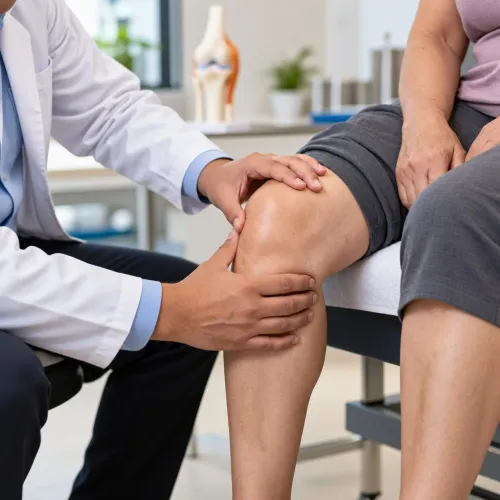
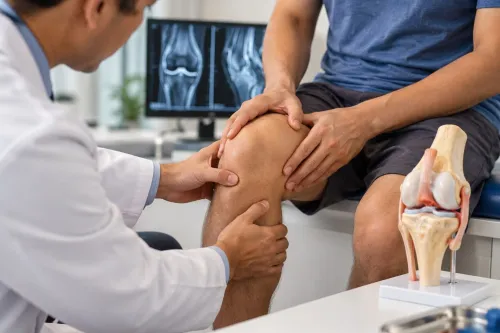
Assessment starts with your symptom history and physical examination. Weight-bearing X-rays show arthritis and alignment; MRI evaluates the meniscus, cartilage, ligaments, and occult bone pathology.
An MRI finding is not automatically the pain source. A degenerative meniscal tear can coexist with osteoarthritis, so the scan must match the pain location, symptom timing, examination findings, and mechanical symptoms. Clicking alone is weak evidence.
An ACL tear on MRI alone does not mandate reconstruction. The ACL reconstruction criteria include recurrent instability, sporting or occupational demands, associated injuries, or rehabilitation that fails to restore acceptable stability.
When rehabilitation is a better first step than arthroscopy
For uncomplicated knee osteoarthritis, arthroscopy rarely targets the cause of pain. Trials show that lavage and debridement provide no clinically meaningful lasting improvement over sham surgery, so NICE advises against knee osteoarthritis arthroscopy for pain or stiffness.
A degenerative meniscal tear is not automatically a surgical problem. In the five-year ESCAPE trial, structured exercise-based physiotherapy remained non-inferior to arthroscopic partial meniscectomy for long-term function in many middle-aged and older adults.
Clicking, intermittent catching, and a feeling of giving way do not reliably predict benefit; an objectively blocked knee that cannot fully extend is different.
When there is no urgent injury, agree a focused non-operative trial:
- Modify aggravating activities without stopping all movement.
- Complete structured physiotherapy before surgery, including quadriceps and hip strengthening, mobility work, and gradual return to function.
- Address weight where relevant, because reducing load can ease symptoms.
- Use suitable analgesia after considering your medical history and other medicines.
- Treat contributing factors such as weakness, stiffness, poor movement control, or hip problems.
- Discuss an injection when appropriate; corticosteroid injections can offer short-term relief, while other injections have condition-specific evidence and are not a cure.
If arthritis is end-stage, with severe joint-space loss, deformity, and disabling symptoms despite treatment, knee replacement for advanced arthritis is a more appropriate discussion than arthroscopy.
What procedure, recovery and risks should you compare
Compare the operation, not just the word arthroscopy. The expected benefit, tissue removed or preserved, and rehabilitation burden differ sharply between these options.
| Option | Recovery and trade-off | When it fits |
|---|---|---|
| Partial meniscectomy | Faster partial meniscectomy recovery, but removes load-sharing meniscal tissue and raises concern about later cartilage degeneration | A damaged fragment causes mechanical symptoms and cannot be repaired |
| Meniscal repair | Meniscal repair recovery takes longer, may require protected weight-bearing, and the repair may fail to heal | A traumatic tear has enough healthy tissue to preserve |
| Diagnostic arthroscopy | Often a shorter recovery than meniscal repair, but it is not a harmless test | The diagnosis remains uncertain and examination and imaging support direct inspection |
| Ligament reconstruction | Longer rehabilitation with staged exercise and sport-specific return | Instability persists after a ligament injury despite rehabilitation |
Plan for transport after anaesthesia, crutches, dressing and wound care, time away from work, driving restrictions, gradual exercise progression, and follow-up appointments. Your surgeon should specify when you can bear weight, bend the knee, drive, work, and resume sport.
Discuss arthroscopy risks, including infection, bleeding, blood clots, stiffness, nerve or blood-vessel injury, anaesthetic complications, persistent pain, and arthritis progression. A quicker early recovery does not automatically make tissue removal the better long-term choice.
Use these questions before knee surgery:
- Which structure is causing the symptoms?
- What exact procedure is planned?
- Will you repair the meniscus or remove part of it?
- What happens if more extensive damage is found?
- What rehabilitation plan, restrictions, and follow-up will I need?
How to decide whether arthroscopy is suitable for you
Arthroscopy suitability depends on the symptom pattern, examination, imaging, and your goals—not age or an MRI report alone. A degenerative tear on MRI may be incidental, while true locking, instability, recurrent swelling, or a loose body may provide a clearer target.
Age, arthritis severity, activity demands, previous surgery, diabetes or other medical conditions, anticoagulant use, and smoking all affect the decision. They influence wound healing, bleeding and clot risk, anaesthesia, and how much rehabilitation you can safely complete.
| Option | What it means | When it fits |
|---|---|---|
| Arthroscopy | Treats a specific repairable problem inside the joint | Displaced meniscal fragment, loose body, selected cartilage or ligament injury |
| Rehabilitation | Exercise, activity changes, medication, and other non-operative care | Pain without a treatable target or widespread degenerative disease |
| Knee replacement | Replaces severely damaged joint surfaces | Advanced arthritis where arthroscopy will not address the main pain source |
If the recommendation remains unclear, seek a second opinion for knee surgery. Ask both clinicians to compare:
- The diagnosis and imaging interpretation
- Non-operative alternatives and expected benefit
- The exact arthroscopic procedure, including repair versus tissue removal
- Whether advanced arthritis makes arthroscopy versus knee replacement the better discussion
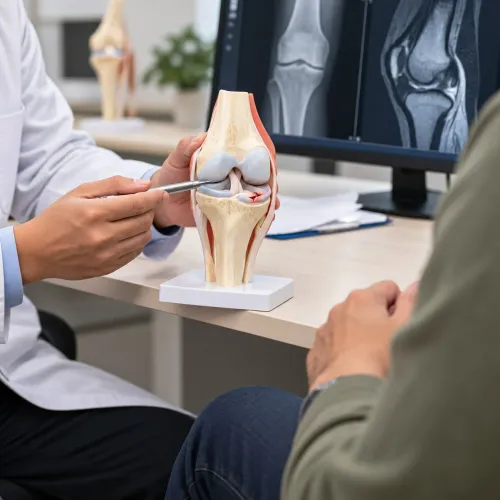
In an orthopaedic knee consultation, Dr Ronak Kothari can review symptoms alongside examination findings, scans, activity needs, medical risks, and previous treatment to clarify whether rehabilitation, repair, reconstruction, replacement, or no operation best fits the problem.
Related service
Knee Arthroscopy & Sports Medicine Knee Arthroscopy & Sports Medicine Dr. Ronak Kothari, a skilled Orthopaedic Surgeon, specializes in Knee Arthroscopy and Sports Medicine, offering advanced, minimally invasive... View service → |
Frequently asked questions
When do persistent knee symptoms need a fresh assessment?
Arrange a fresh assessment when symptoms last several weeks despite sensible activity changes and treatment, return after rehabilitation, or affect work, sleep, sport, or full movement.
Which knee problems can give arthroscopy a clear target?
Arthroscopy is easier to justify when examination and imaging identify a specific problem inside the joint that the procedure can address, such as a displaced meniscal tear or loose body causing mechanical symptoms.
When is rehabilitation a better first step than arthroscopy?
Rehabilitation is usually the better first step when symptoms do not point to a treatable mechanical problem, particularly when strength, movement control, conditioning, or load management are contributing factors.
What should you compare before choosing knee arthroscopy?
Compare the proposed procedure, expected benefit, recovery demands, complications, rehabilitation plan, and non-surgical alternatives with an orthopaedic specialist.