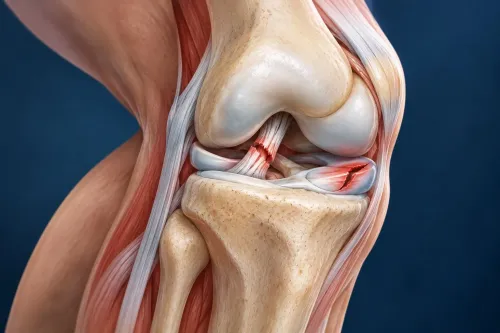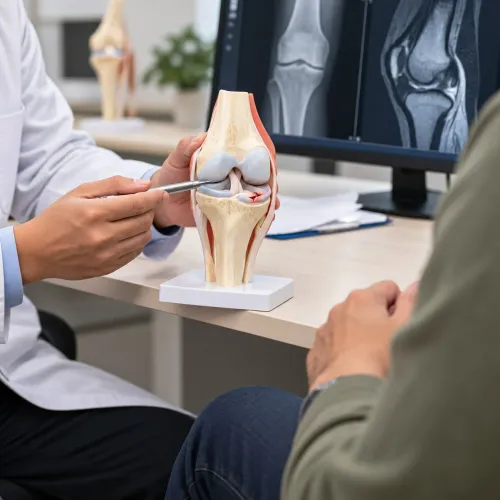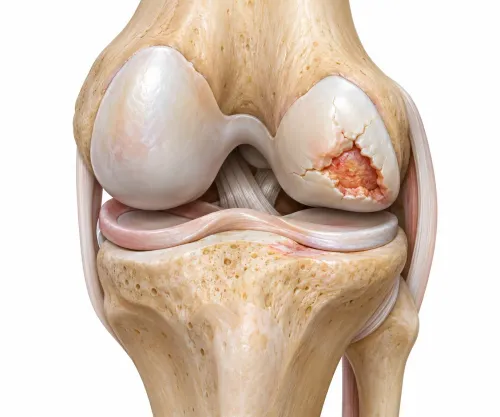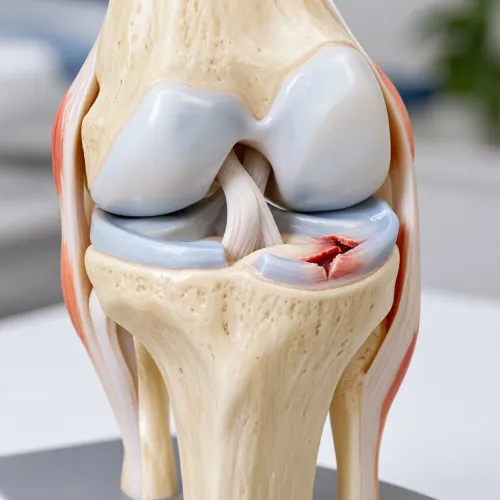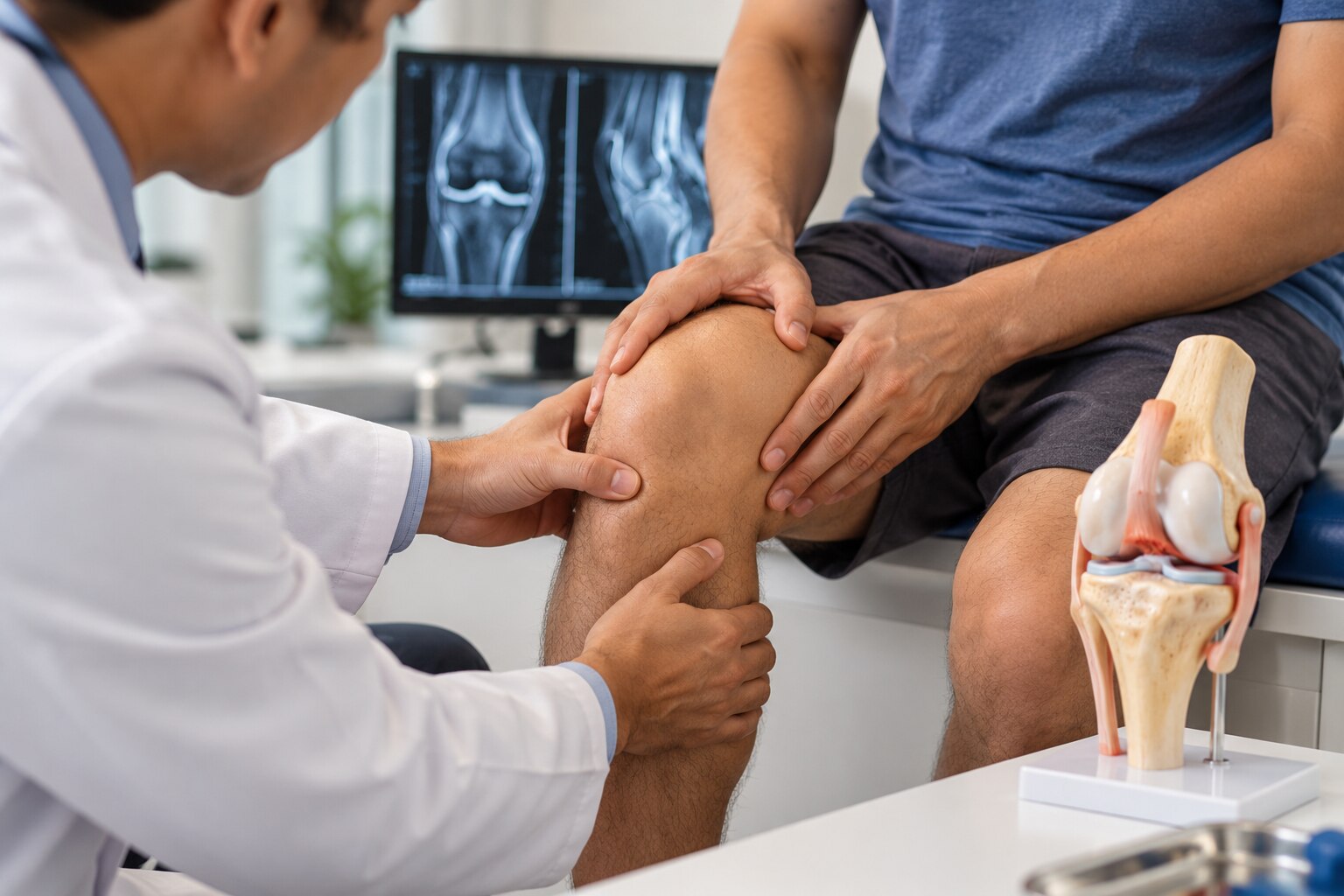
A knee becomes a complex surgical problem when deformity, bone loss, ligament damage, infection, a failed implant, or severe stiffness changes the usual treatment pathway. By the end, you will know which symptoms require prompt assessment, what a specialist evaluation involves, and why the final treatment may differ from a routine knee operation.
Key takeaways
- Seek specialist assessment for instability, infection, deformity, bone loss, or failed knee replacement.
- Revision knee replacement requires finding why the first implant failed.
- Bring operation reports, implant details, scans, and infection-treatment records.
- Ask how each treatment option addresses your specific structural problem.
Which knee problems make specialist assessment important?
Aching after activity is different from a knee with structural failure. Complex knee conditions include severe post-traumatic knee deformity, arthritis in multiple compartments, major bone loss, ligament deficiency, recurrent instability, failed knee replacement, infection after surgery, established stiffness, periprosthetic fracture, extensor-mechanism disruption, and failed ACL reconstruction.
| Routine knee pain | Specialist warning sign | Why assessment matters |
|---|---|---|
| Mild ache with preserved movement | Fixed varus or valgus deformity, major loss of flexion or extension, or night pain | Alignment, bone loss, cartilage damage, or multiple-compartment arthritis may require reconstruction or replacement planning |
| Occasional discomfort | Recurrent giving-way or other knee instability symptoms | Ligament deficiency can damage remaining cartilage and make ordinary treatment unreliable |
| Temporary swelling | Hot, rapidly swollen knee, fever, wound drainage, inability to bear weight, or rapidly worsening pain | Infection after surgery or septic arthritis needs prompt assessment, not a routine appointment |
| Pain with movement | Loss of active straight-leg raising, sudden inability to straighten the knee, or a palpable quadriceps or patellar tendon defect | Extensor-mechanism disruption often needs urgent repair or reconstruction |
| A single previous procedure | Failed implant, periprosthetic fracture, severe stiffness, or multiple operations | Revision planning must account for bone stock, component fixation, scars, motion, and ligament function |
A knee dislocation or multiligament injury needs assessment for popliteal-artery damage even when foot pulses are present. Serial pulse checks, an ankle-brachial index, or CT angiography may be needed before ligament reconstruction.
Failed ACL reconstruction becomes staged when tunnels are widened or overlapping, or when meniscal deficiency, malalignment, cartilage loss, or another ligament injury requires correction before graft replacement.
What does a complex knee evaluation look for?
Before choosing treatment, a complex knee evaluation begins with symptom timing, previous injuries, medical conditions, infection risk, activity goals, and every prior operation. Bring operative reports, implant stickers or implant cards, discharge summaries, physiotherapy records, and earlier X-rays. This history can reveal whether pain follows surgery, injury, infection, or progressive wear.
Examination covers gait, limb alignment, scars, swelling, skin condition, range of motion, fixed flexion contracture, ligament stability, patellar tracking, hip or spine referral, and the ability to perform a straight-leg raise. Loss of active straight-leg raising points toward extensor-mechanism failure, not merely stiffness.
| Investigation | Main information | Why it matters |
|---|---|---|
| Weight-bearing knee X-rays | Joint-space loss, component position, fractures, deformity | Shows how the knee behaves under load |
| Long-leg alignment radiographs | Mechanical axis from hip to ankle | Identifies varus or valgus malalignment |
| CT for knee implant rotation | Bone loss, component rotation, fracture configuration, widened surgical tunnels | Guides revision, fracture, and reconstruction planning |
| MRI | Remaining cartilage, menisci, tendons, and other soft tissues | Helps when radiographs and CT cannot answer the question |
For a painful knee replacement, the work-up separates infection, loosening, instability, malalignment, polyethylene wear, stiffness, fracture, extensor-mechanism failure, referred hip or spine pain, and non-orthopaedic causes. CRP and ESR, radiographs, and joint aspiration can be combined; aspiration reports synovial white-cell count, differential, and culture. A draining sinus communicating with the prosthesis is diagnostic of infection.
A normal incision or one normal blood test does not exclude chronic infection.
Why is revision knee replacement different from primary surgery?
A failed knee replacement cannot be approached like a first replacement because the original operation has changed the bone, alignment, ligaments, and soft tissues. Primary surgery usually works with known bone surfaces and intact ligaments; revision knee replacement may require removal of well-fixed components before rebuilding the knee.
The surgeon must identify the pain generator before choosing revision. A painful implant may reflect periprosthetic joint infection, loosening, malalignment, instability, polyethylene wear, stiffness, fracture, extensor-mechanism failure, or referred hip and spine pain. Revising the implant without finding the cause can leave the pain unchanged.
Revision planning may involve:
1. Filling bone defects with metaphyseal cones, sleeves, structural grafts, or other reconstruction, then selecting revision-specific femoral and tibial components.
2. Restoring stability when collateral ligaments are damaged. A rotating-hinge or another constrained implant may be necessary when ordinary components cannot control the knee.
3. Assessing a periprosthetic fracture by checking component fixation, remaining usable bone, and the fracture’s relationship to the implant. A loose component can make fracture fixation alone inadequate and require revision arthroplasty with fixation.
4. Treating instability caused by flexion-extension gap imbalance, component malrotation, ligament insufficiency, polyethylene wear, or neuromuscular disease. A thicker liner is not a reliable fix when alignment or ligament failure remains.
Stiffness also requires cause-based planning. Infection, oversized or malpositioned components, instability, heterotopic ossification, and inadequate rehabilitation must be considered before manipulation under anaesthesia. Manipulation within about 12 weeks can work better than late treatment; established arthrofibrosis may need arthroscopic or open lysis of adhesions or component revision.
Repeated manipulation risks fracture, tendon injury, and recurrent stiffness.
How are treatment options matched to the actual knee problem?
The knee treatment decision starts with the diagnosed problem, not the label “difficult knee.” A specialist matches treatment to the affected compartments, alignment, bone stock, ligament function, infection status, range of motion, pain, and functional goals.
1. Treat the least invasive problem first. Physiotherapy, activity changes, medication, or injections may control symptoms when the joint remains structurally usable. Arthroscopy, ligament reconstruction, osteotomy, or cartilage and osteochondral restoration may suit selected patients with repairable damage, focal cartilage loss, malalignment, or instability.
2. Test whether the joint can be preserved. Knee preservation unsuitable is the correct conclusion when cartilage loss is advanced, bone damage is extensive, deformity is severe, or pain and disability continue despite appropriate non-surgical care.
A partial replacement becomes a poor choice when arthritis affects more than one compartment, inflammatory arthritis is present, deformity is substantial, a major ligament is insufficient, or stiffness prevents reliable function.
3. Choose replacement only when the remaining knee cannot provide dependable function. Partial or total replacement may fit isolated or widespread arthritis, while revision replacement requires separate planning for loose implants, bone defects, damaged ligaments, malalignment, or a failed extensor mechanism.
4. Stage the operation when one procedure cannot safely solve every problem. Infection, bone-grafted ACL tunnels, severe bone loss, poor soft tissue, or vascular injury may need treatment before definitive reconstruction.
Robotic knee surgery limitations matter here: robotic assistance supports planning and bone preparation, but it does not replace diagnosis, implant selection, soft-tissue balancing, or surgical judgment.
When should you seek a complex knee opinion, and what should you ask?
A hot, swollen knee with fever, wound drainage, rapidly worsening pain, inability to bear weight, or a new painful prosthesis needs prompt medical care, not a routine appointment. Infection can damage tissue and narrow later treatment choices.
| Situation | Recommended response | Why it matters |
|---|---|---|
| Acute warning signs | Seek prompt medical assessment | Septic arthritis, prosthetic-joint infection, fracture, or extensor damage may need urgent treatment |
| Complex warning signs | Arrange a complex knee opinion | The case may require revision implants, bone reconstruction, ligament balancing, or staged surgery |
| Persistent routine symptoms | Start with an orthopaedic assessment | The cause may respond to rehabilitation, medication, injection, or targeted surgery |
Request evaluation by a complex knee surgeon after multiple operations or with an infected or failed implant, major deformity, bone loss, recurrent instability, extensor-mechanism failure, periprosthetic fracture, severe stiffness, or multiligament injury. These are appropriate reasons for a revision knee consultation or failed knee implant assessment.
Use these questions for a knee specialist:
- What is the named cause of my pain?
- Has infection been tested with blood tests, imaging, and joint aspiration when needed?
- How much usable bone remains?
- Are the implants loose, worn, or malpositioned?
- Which ligaments and the extensor mechanism still function?
- Is one-stage or staged surgery safer?
- Which operation reports, implant records, X-rays, long-leg films, CT scans, or MRI are needed?
- What non-operative options remain, and what could happen if treatment is delayed?
In Mumbai, Dr Ronak Kothari can assess implant, alignment, ligament, bone, and reconstruction questions. A useful consultation produces alternatives and a plan—not an automatic operation.
Related services
Partial Knee Replacement Dr. Ronak Kothari, a proficient Orthopaedic Surgeon, offers advanced Partial Knee Replacement (Unicompartmental Knee Replacement) procedures designed... View service → |
Knee Preservation Procedures Dr. Ronak Kothari, an experienced Orthopaedic Surgeon, specializes in Knee Preservation Procedures aimed at maintaining the natural knee joint for as... View service → |
Frequently asked questions
Which knee problems make specialist assessment important?
Specialist assessment is important for severe post-traumatic deformity, multi-compartment arthritis, major bone loss, ligament deficiency, recurrent instability, failed knee replacement, infection after surgery, established stiffness, periprosthetic fracture, extensor-mechanism disruption, and failed ACL reconstruction.
What does a complex knee evaluation look for?
The evaluation looks for the source of pain, deformity, instability, stiffness, bone loss, implant problems, infection, ligament damage, and extensor-mechanism failure using your history, examination, imaging, and relevant test results.
Why is revision knee replacement different from primary surgery?
Revision surgery must address the reason the original replacement failed, such as loosening, infection, instability, wear, fracture, stiffness, or bone loss. It can require removal of existing components, treatment of damaged bone, and more constrained implants.
How are treatment options matched to the actual knee problem?
Treatment is matched to the failed structure and the severity of damage. Options can include targeted non-surgical care, ligament or fracture procedures, infection treatment, stiffness management, osteotomy, partial or total replacement, or revision replacement.
When should you seek a complex knee opinion, and what should you ask?
Seek an opinion when pain, instability, stiffness, deformity, infection, or loss of function persists after treatment, especially after knee replacement or ligament surgery. Ask what failed, what imaging or tests are needed, which options fit your knee, and what recovery involves.
Related services
Knee Replacement Surgery Knee replacement surgery, or knee arthroplasty, is a procedure to replace a damaged knee joint with an artificial implant made of metal and plastic. View service → |
Knee Arthroscopy & Sports Medicine Knee Arthroscopy & Sports Medicine Dr. Ronak Kothari, a skilled Orthopaedic Surgeon, specializes in Knee Arthroscopy and Sports Medicine, offering advanced, minimally invasive... View service → |
Robotic Joint Replacement Dr. Ronak Kothari, a leading Orthopaedic Surgeon, specializes in Robotic Joint Replacement Surgery, offering state-of-the-art precision and enhanced... View service → |
General Consultation ₹1000 General Consultation |